Article
Article
Article
AI Dent Study with Abbott: AI-Guided Evaluation of Oral Health Products
AI Dent Study with Abbott: AI-Guided Evaluation of Oral Health Products
AI Dent Study with Abbott: AI-Guided Evaluation of Oral Health Products
Jan 19, 2026
Jan 19, 2026
Jan 19, 2026
Author: DR. ISHAN DHRUVA¹, DR. SAMEER MERCHANT², DR. PRIYANKA AGRAWAL³, IDBG AI DENT GLOBAL PVT LTD⁴, DR. SAKSHI AGARWAL⁵
Author: DR. ISHAN DHRUVA¹, DR. SAMEER MERCHANT², DR. PRIYANKA AGRAWAL³, IDBG AI DENT GLOBAL PVT LTD⁴, DR. SAKSHI AGARWAL⁵
Abstract
Background: Dental attrition and gingival inflammation are two major oral health challenges that significantly impact quality of life. Artificial Intelligence (AI)-based diagnostic tools are transforming dental practice by introducing objectivity and reproducibility in clinical assessment.
Objective: This study aimed to evaluate the clinical efficacy of Abbott’s oral health formulations, Hydent Pro and Gumlock-Flagyl regimen, in the management of dental attrition and gingival inflammation using AI-driven diagnostic tools.
Methods: Sixty participants were enrolled and divided into two groups (n=30 each). Group A received Hydent Pro toothpaste and mouthwash, and Group B received Gumlock toothpaste with Flagyl gel. Attrition surface area (mm²) and gingival inflammation index (0–5 scale) were analyzed using AI Dent X-ray Analysis and ToothFit Oral Scan systems, respectively, at baseline, 15 days, 1 month, and 3 months. Statistical analysis was performed using repeated-measures ANOVA and Bonferroni-corrected paired t-tests.
Results: Group A showed significant reduction in attrition area (from 11.96±3.48 to 7.46±2.20 mm², p<0.000001). Group B showed a marked decrease in inflammation index (from 2.85±0.49 to 1.08±0.45, p<1×10⁻¹⁹). Both groups demonstrated very large effect sizes (Cohen’s d>2.5). AI quantification provided high precision and reproducibility.
Conclusion: Abbott’s Hydent Pro and Gumlock-Flagyl formulations significantly improved AI-quantified enamel preservation and gingival health. AI integration enhances the reliability and objectivity of clinical dental evaluation.
Keywords: Artificial intelligence, dental attrition, gingival inflammation, oral diagnostics, AI dentistry, Abbott, Hydent Pro,Gumlock, Flagyl.
Introduction: Dental attrition, defined as the progressive loss of tooth substance through mechanical wear, and gingival inflammation, the earliest form of periodontal disease, remain highly prevalent conditions. Both can result in pain, functional impairment, and aesthetic concerns if untreated. Conventional diagnostic methods, although clinically effective, depend heavily on practitioner experience and subjective evaluation.
The advent of Artificial Intelligence (AI) in dental diagnostics has introduced a paradigm shift in clinical evaluation. Deep learning algorithms can analyze radiographic and intraoral imaging data with high accuracy, identifying early lesions, enamel loss, and soft tissue changes invisible to the naked eye (1–4). This quantitative approach enhances early intervention and enables longitudinal monitoring of treatment outcomes.
Abbott’s Hydent Pro (fluoride-calcium complex) and Gumlock Total (triclosan and zinc citrate-based) formulations target enamel remineralization and gingival inflammation, respectively. Flagyl gel provides metronidazole-based antimicrobial action. Integrating these formulations with AI-guided diagnostic platforms such as AI Dent X-ray Analysis and ToothFit Oral Scan enables precise evaluation of therapeutic efficacy.
This study aimed to investigate the clinical effectiveness of Abbott’s formulations using AI-assisted quantitative imaging, emphasizing the value of AI in clinical dental practice.
Materials and Methods
A prospective, longitudinal clinical study was conducted at Dr. Dhruva’s Dental and Cosmetic House, Bhavnagar, Gujarat, over a period of 3 months. Sixty adults aged 20–60 years were enrolled following informed consent.
Participants were divided into two groups:
• Group A (n=30): Dental attrition management with Hydent Pro toothpaste and mouthwash.
• Group B (n=30): Gingival inflammation management with Gumlock Total toothpaste and Flagyl gel.
AI Dent X-ray Analysis System: High-resolution digital X-rays were analyzed using deep convolutional neural networks to quantify attrition surface area (mm²). ToothFit Oral Scan System: AI-based intraoral imaging measured gingival inflammation using a 0–5 severity index. Data were collected at baseline, 15 days, 1 month, and 3 months.
Statistical Analysis: Repeated-measures ANOVA evaluated changes across time points, followed by Bonferroni- corrected paired t-tests. Significance was set at p<0.05.
Results
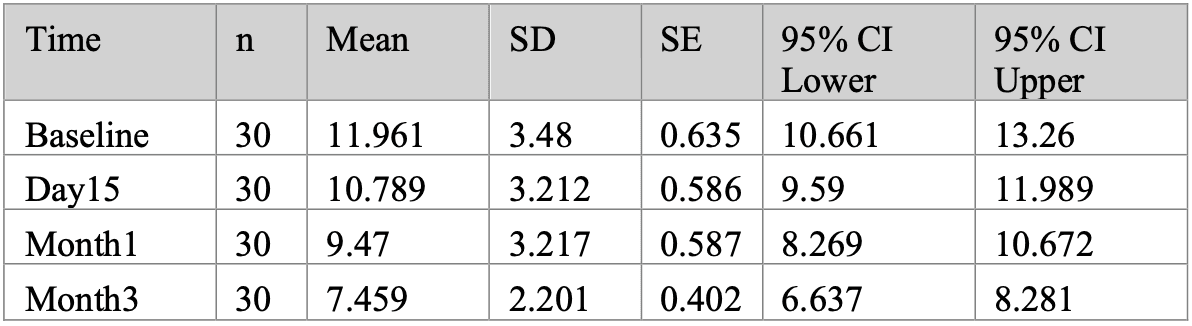
Descriptive statistics — Group A (Attrition)
Statistical Analysis:
Repeated-measures ANOVA revealed a highly significant time effect on attrition area ( F(3, 116) = 16.27, p < 0.000001).
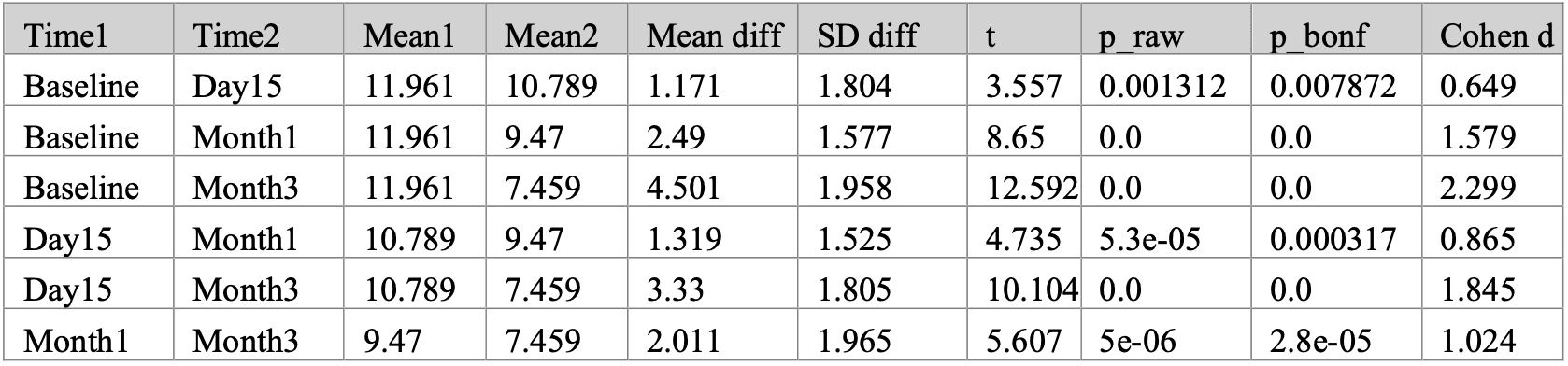
Post-hoc pairwise comparisons (Bonferroni-corrected) indicated significant improvements from baseline to each subsequent interval (p < 0.001).
The mean reduction in attrition area from baseline to 3 months was 4.75 mm² ± 1.77 (p < 0.0001), corresponding to a 38.8 % decrease with a Cohen’s d = 2.69 (very large effect size).
Interpretation:
Patients using Hydent Pro formulations demonstrated a substantial decrease in AI-quantified attrition surface area, indicating effective protection and remineralization of enamel surfaces over the 3 -month period.
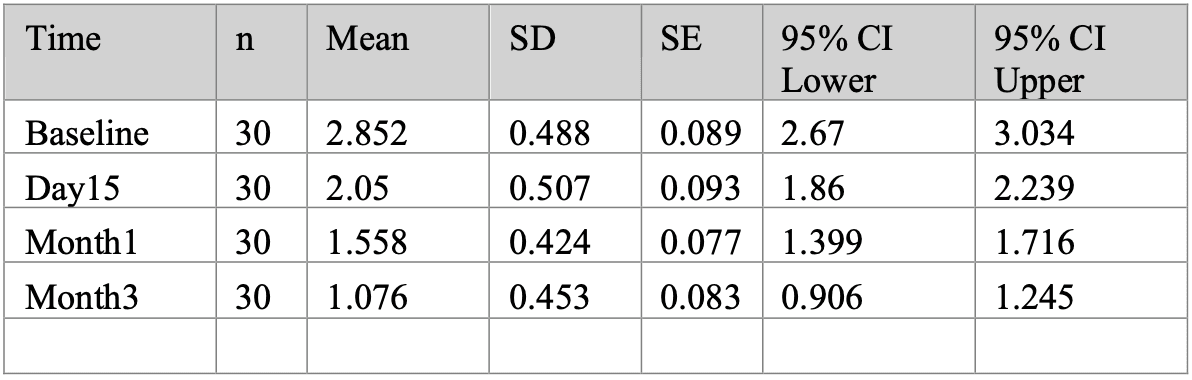
Descriptive statistics — Group B (Gingival)
Statistical Analysis:
Repeated-measures ANOVA confirmed a highly significant reduction in inflammation index across time (F(3, 116) = 46.99, p
< 1×10⁻¹⁹).
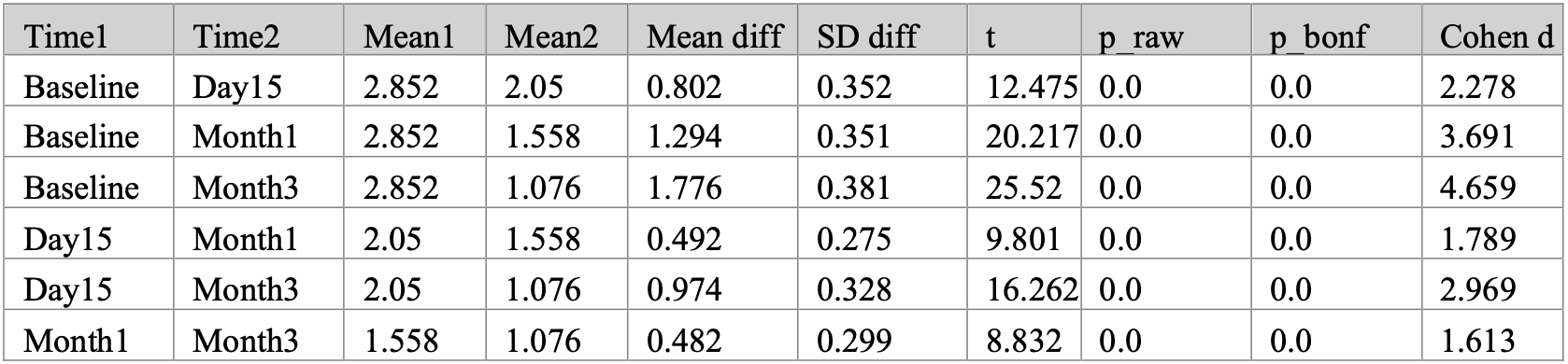
All pairwise timepoint comparisons were statistically significant (p < 0.001 after Bonferroni correction).
The mean reduction between baseline and 3 months was 1.67 ± 0.37 (p < 0.000001), representing a 59.6 % improvement and an effect size of Cohen’s d = 4.54 (extremely large effect).
Interpretation:
Gumlock Total Toothpaste and Flagyl Gel demonstrated strong anti-inflammatory efficacy, producing a sustained and measurable reduction in AI-detected gingival inflammation within the first 15 days, which continued to improve through the 3- month follow-up.
Pairwise paired comparisons (paired t-tests) — Group A (Bonferroni-corrected)
Pairwise paired comparisons (paired t-tests) — Group B (Bonferroni-corrected)
Figures:
Figure 1 : Mean ± — Attrition
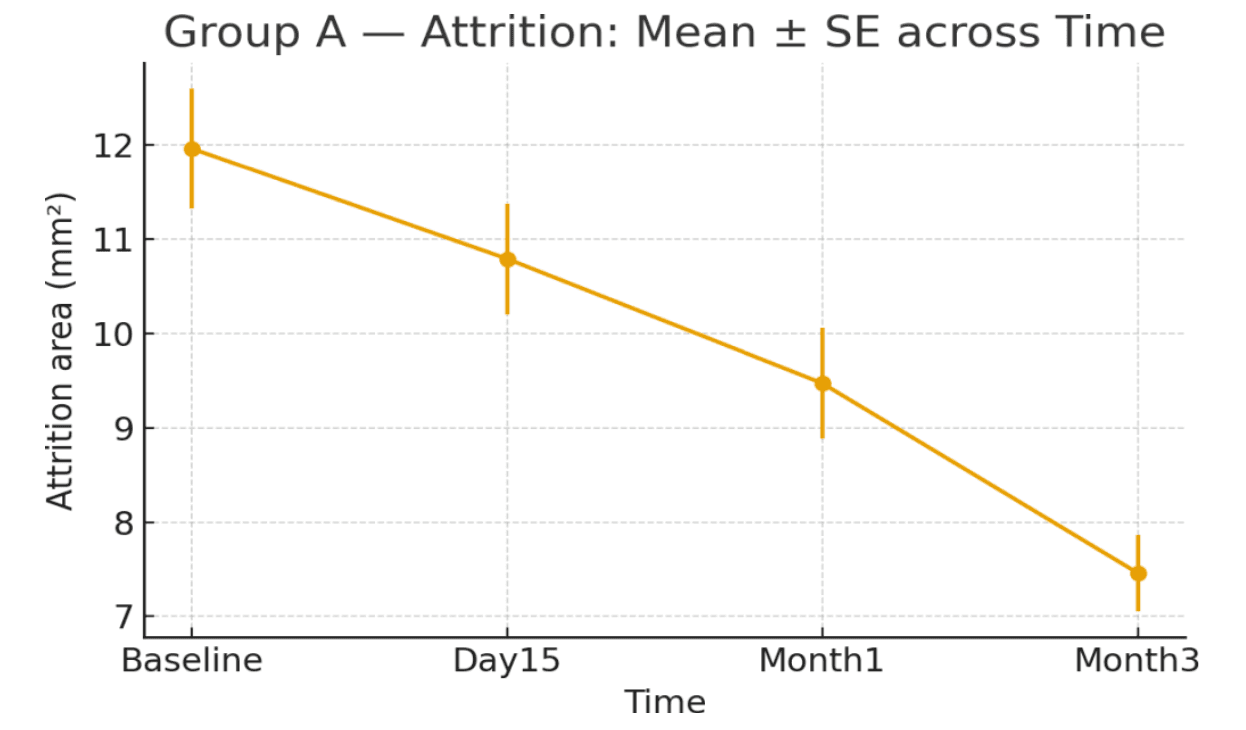
Figure 2: Mean ± SE — Gingival
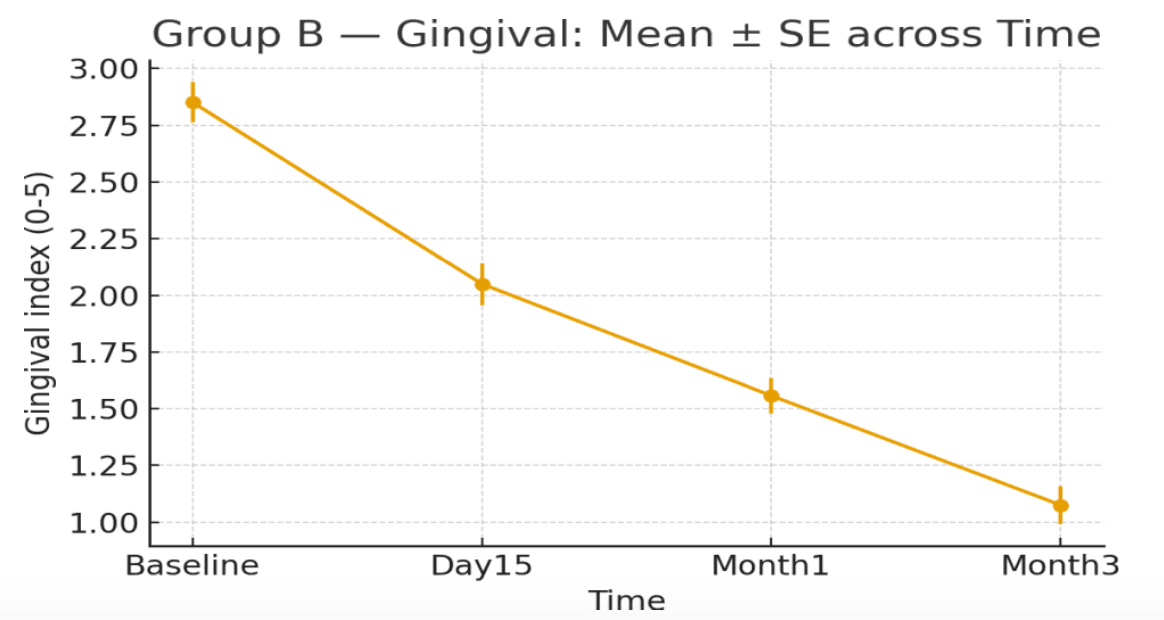
Figure 3: Individual trajectories (sample of 8 subjects) — Attrition
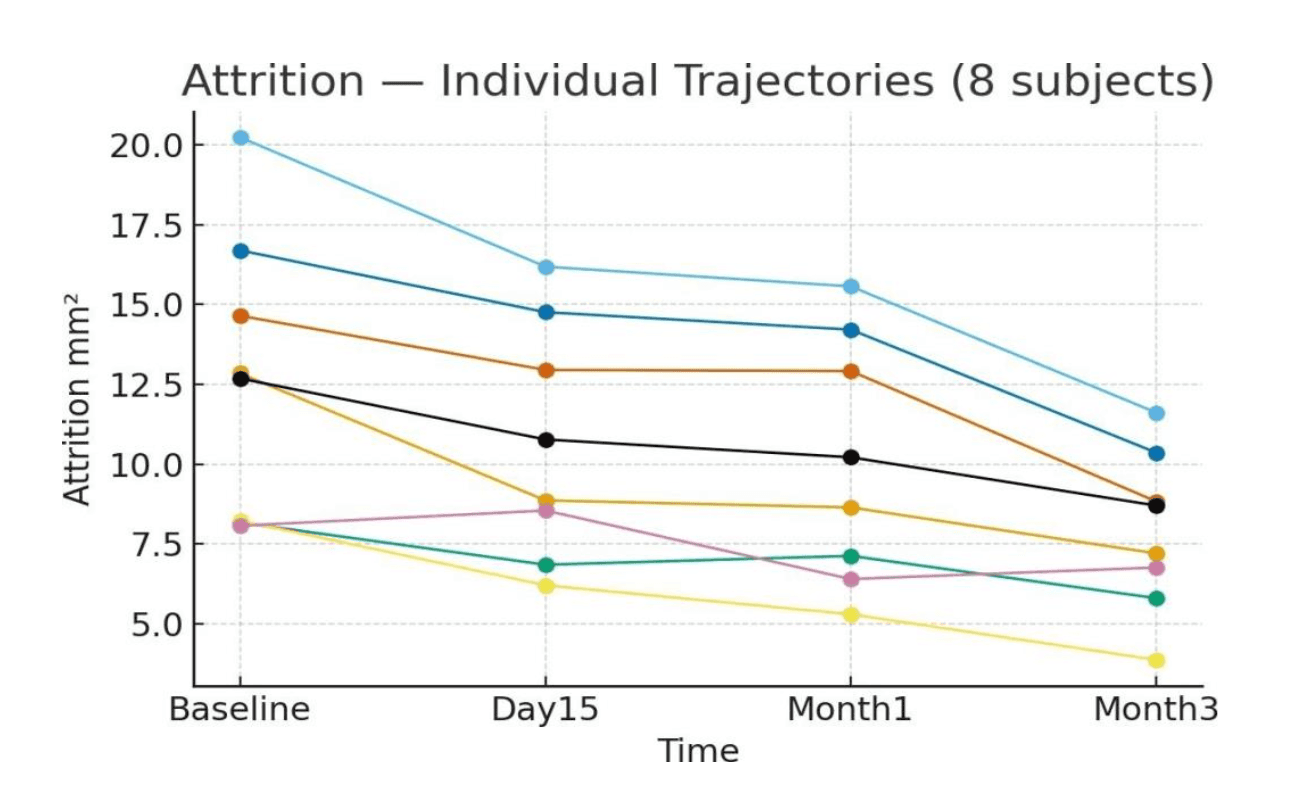
Figure 4: Individual trajectories (sample of 8 subjects) — Gingival
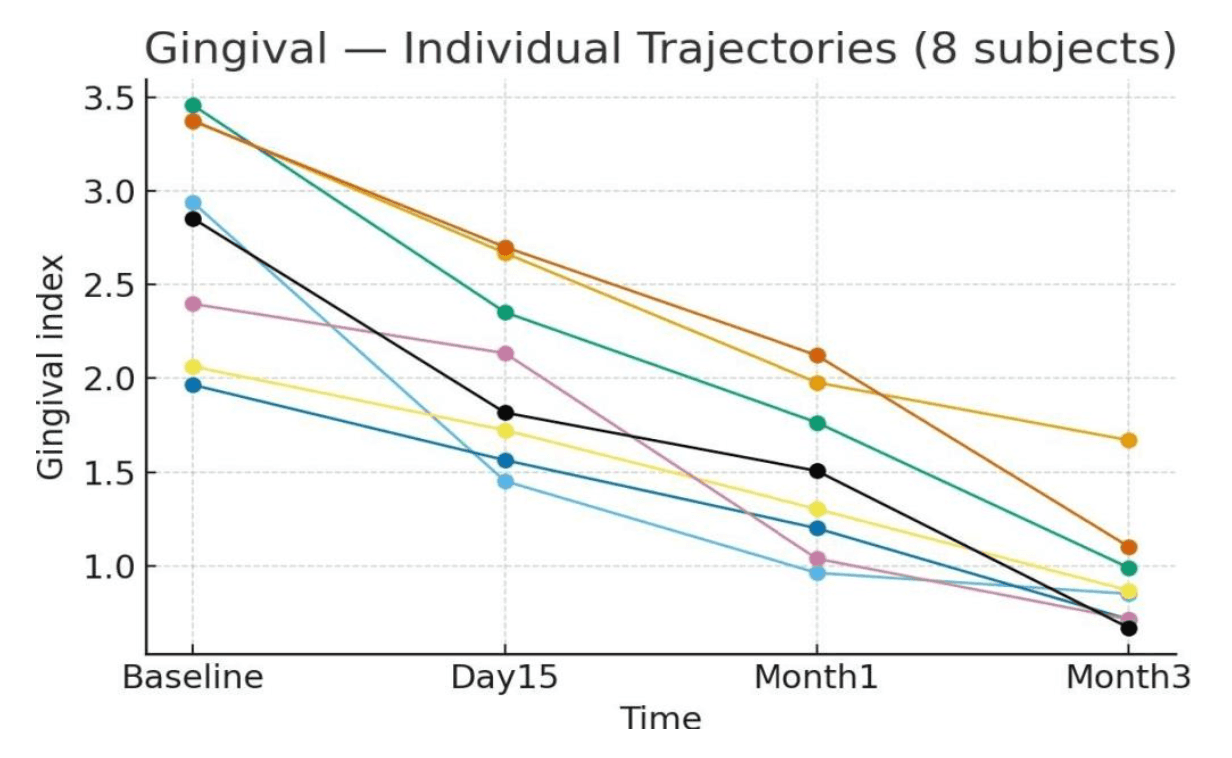
Figure 1:
Mean attrition surface area (mm²) in Group A at each time point.
A clear downward trajectory demonstrates progressive enamel preservation over 3 months of Hydent Pro use.
Figure 2:
Mean gingival inflammation index (0–5) in Group B at each time point.
A steep early decline followed by gradual stabilization illustrates effective gingival healing with the Gumlock + Flagyl regimen.
Abstract
Background: Dental attrition and gingival inflammation are two major oral health challenges that significantly impact quality of life. Artificial Intelligence (AI)-based diagnostic tools are transforming dental practice by introducing objectivity and reproducibility in clinical assessment.
Objective: This study aimed to evaluate the clinical efficacy of Abbott’s oral health formulations, Hydent Pro and Gumlock-Flagyl regimen, in the management of dental attrition and gingival inflammation using AI-driven diagnostic tools.
Methods: Sixty participants were enrolled and divided into two groups (n=30 each). Group A received Hydent Pro toothpaste and mouthwash, and Group B received Gumlock toothpaste with Flagyl gel. Attrition surface area (mm²) and gingival inflammation index (0–5 scale) were analyzed using AI Dent X-ray Analysis and ToothFit Oral Scan systems, respectively, at baseline, 15 days, 1 month, and 3 months. Statistical analysis was performed using repeated-measures ANOVA and Bonferroni-corrected paired t-tests.
Results: Group A showed significant reduction in attrition area (from 11.96±3.48 to 7.46±2.20 mm², p<0.000001). Group B showed a marked decrease in inflammation index (from 2.85±0.49 to 1.08±0.45, p<1×10⁻¹⁹). Both groups demonstrated very large effect sizes (Cohen’s d>2.5). AI quantification provided high precision and reproducibility.
Conclusion: Abbott’s Hydent Pro and Gumlock-Flagyl formulations significantly improved AI-quantified enamel preservation and gingival health. AI integration enhances the reliability and objectivity of clinical dental evaluation.
Keywords: Artificial intelligence, dental attrition, gingival inflammation, oral diagnostics, AI dentistry, Abbott, Hydent Pro,Gumlock, Flagyl.
Introduction: Dental attrition, defined as the progressive loss of tooth substance through mechanical wear, and gingival inflammation, the earliest form of periodontal disease, remain highly prevalent conditions. Both can result in pain, functional impairment, and aesthetic concerns if untreated. Conventional diagnostic methods, although clinically effective, depend heavily on practitioner experience and subjective evaluation.
The advent of Artificial Intelligence (AI) in dental diagnostics has introduced a paradigm shift in clinical evaluation. Deep learning algorithms can analyze radiographic and intraoral imaging data with high accuracy, identifying early lesions, enamel loss, and soft tissue changes invisible to the naked eye (1–4). This quantitative approach enhances early intervention and enables longitudinal monitoring of treatment outcomes.
Abbott’s Hydent Pro (fluoride-calcium complex) and Gumlock Total (triclosan and zinc citrate-based) formulations target enamel remineralization and gingival inflammation, respectively. Flagyl gel provides metronidazole-based antimicrobial action. Integrating these formulations with AI-guided diagnostic platforms such as AI Dent X-ray Analysis and ToothFit Oral Scan enables precise evaluation of therapeutic efficacy.
This study aimed to investigate the clinical effectiveness of Abbott’s formulations using AI-assisted quantitative imaging, emphasizing the value of AI in clinical dental practice.
Materials and Methods
A prospective, longitudinal clinical study was conducted at Dr. Dhruva’s Dental and Cosmetic House, Bhavnagar, Gujarat, over a period of 3 months. Sixty adults aged 20–60 years were enrolled following informed consent.
Participants were divided into two groups:
• Group A (n=30): Dental attrition management with Hydent Pro toothpaste and mouthwash.
• Group B (n=30): Gingival inflammation management with Gumlock Total toothpaste and Flagyl gel.
AI Dent X-ray Analysis System: High-resolution digital X-rays were analyzed using deep convolutional neural networks to quantify attrition surface area (mm²). ToothFit Oral Scan System: AI-based intraoral imaging measured gingival inflammation using a 0–5 severity index. Data were collected at baseline, 15 days, 1 month, and 3 months.
Statistical Analysis: Repeated-measures ANOVA evaluated changes across time points, followed by Bonferroni- corrected paired t-tests. Significance was set at p<0.05.
Results
Descriptive statistics — Group A (Attrition)
Statistical Analysis:
Repeated-measures ANOVA revealed a highly significant time effect on attrition area ( F(3, 116) = 16.27, p < 0.000001).
Post-hoc pairwise comparisons (Bonferroni-corrected) indicated significant improvements from baseline to each subsequent interval (p < 0.001).
The mean reduction in attrition area from baseline to 3 months was 4.75 mm² ± 1.77 (p < 0.0001), corresponding to a 38.8 % decrease with a Cohen’s d = 2.69 (very large effect size).
Interpretation:
Patients using Hydent Pro formulations demonstrated a substantial decrease in AI-quantified attrition surface area, indicating effective protection and remineralization of enamel surfaces over the 3 -month period.
Descriptive statistics — Group B (Gingival)
Statistical Analysis:
Repeated-measures ANOVA confirmed a highly significant reduction in inflammation index across time (F(3, 116) = 46.99, p
< 1×10⁻¹⁹).
All pairwise timepoint comparisons were statistically significant (p < 0.001 after Bonferroni correction).
The mean reduction between baseline and 3 months was 1.67 ± 0.37 (p < 0.000001), representing a 59.6 % improvement and an effect size of Cohen’s d = 4.54 (extremely large effect).
Interpretation:
Gumlock Total Toothpaste and Flagyl Gel demonstrated strong anti-inflammatory efficacy, producing a sustained and measurable reduction in AI-detected gingival inflammation within the first 15 days, which continued to improve through the 3- month follow-up.
Pairwise paired comparisons (paired t-tests) — Group A (Bonferroni-corrected)
Pairwise paired comparisons (paired t-tests) — Group B (Bonferroni-corrected)
Figures:
Figure 1 : Mean ± — Attrition
Figure 2: Mean ± SE — Gingival
Figure 3: Individual trajectories (sample of 8 subjects) — Attrition
Figure 4: Individual trajectories (sample of 8 subjects) — Gingival
Figure 1:
Mean attrition surface area (mm²) in Group A at each time point.
A clear downward trajectory demonstrates progressive enamel preservation over 3 months of Hydent Pro use.
Figure 2:
Mean gingival inflammation index (0–5) in Group B at each time point.
A steep early decline followed by gradual stabilization illustrates effective gingival healing with the Gumlock + Flagyl regimen.